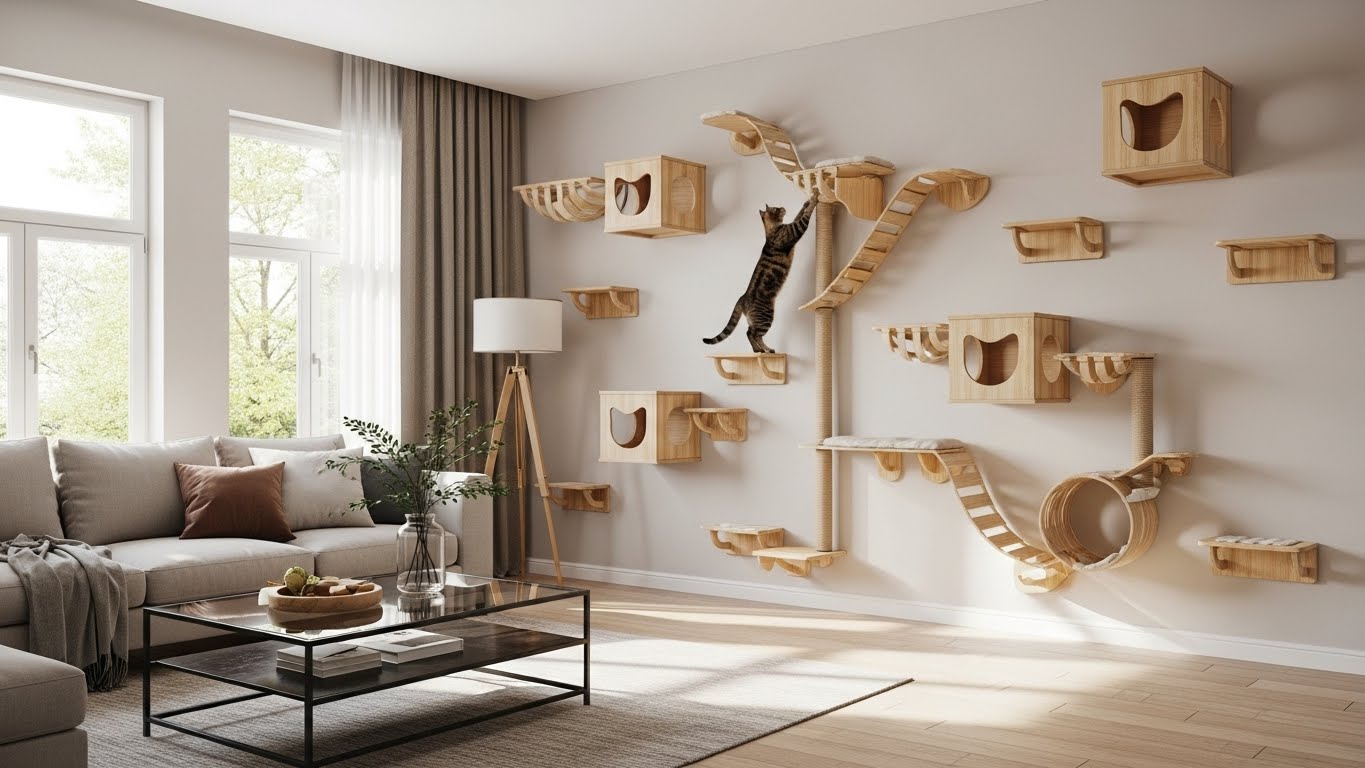
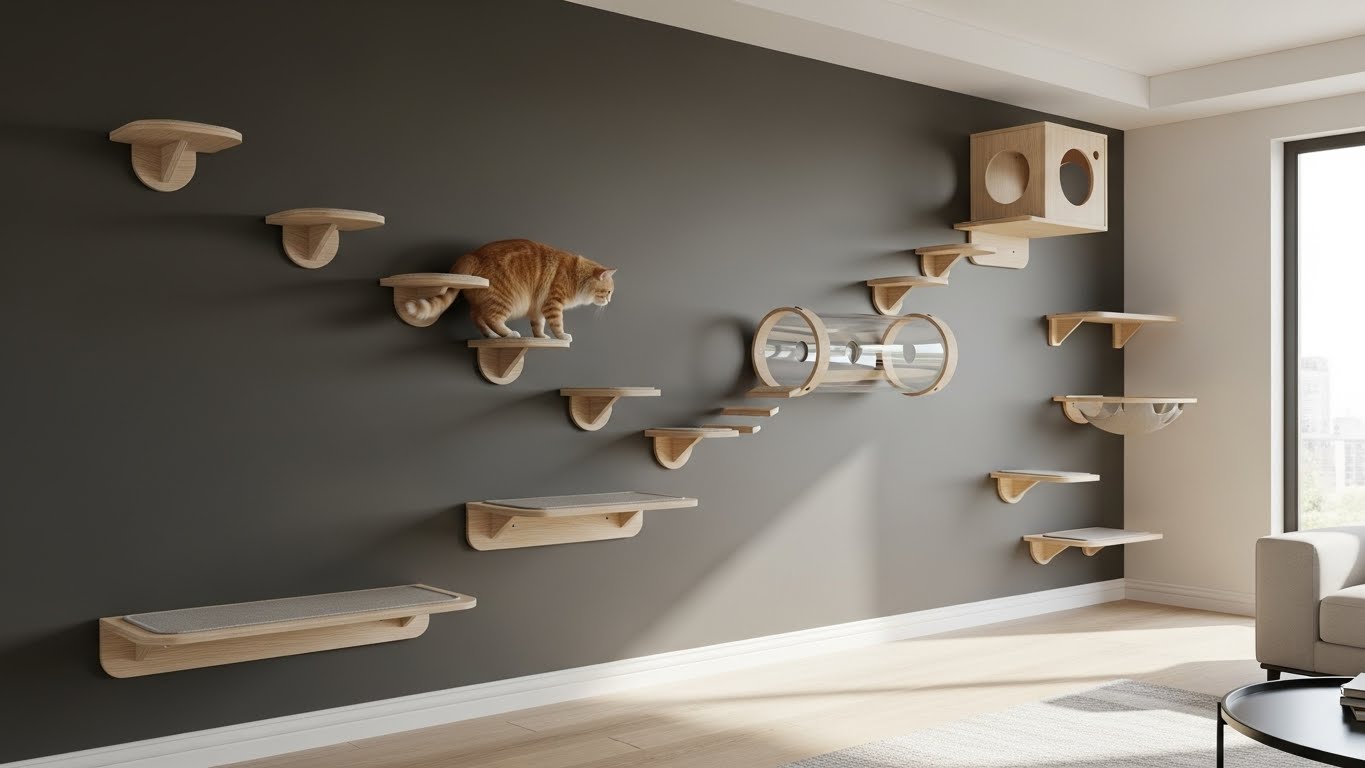
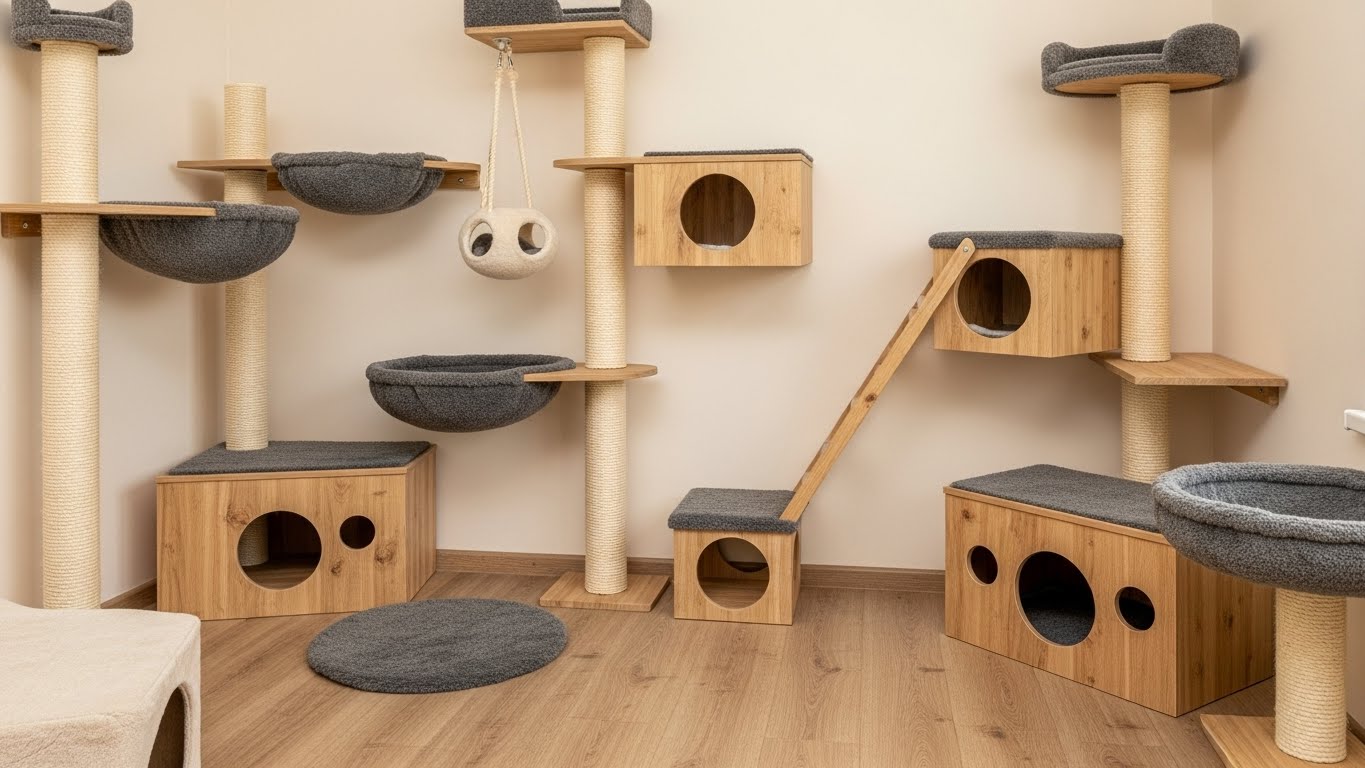
A floor-to-ceiling cat climbing wall turns unused vertical space into an adventure zone. By combining shelves, steps, and platforms at varying heights, you give your cat the freedom to climb, leap, and perch safely indoors.
This type of playground is especially beneficial for athletic breeds like Bengals or Abyssinians, as it encourages full-body movement and confidence-building exploration.
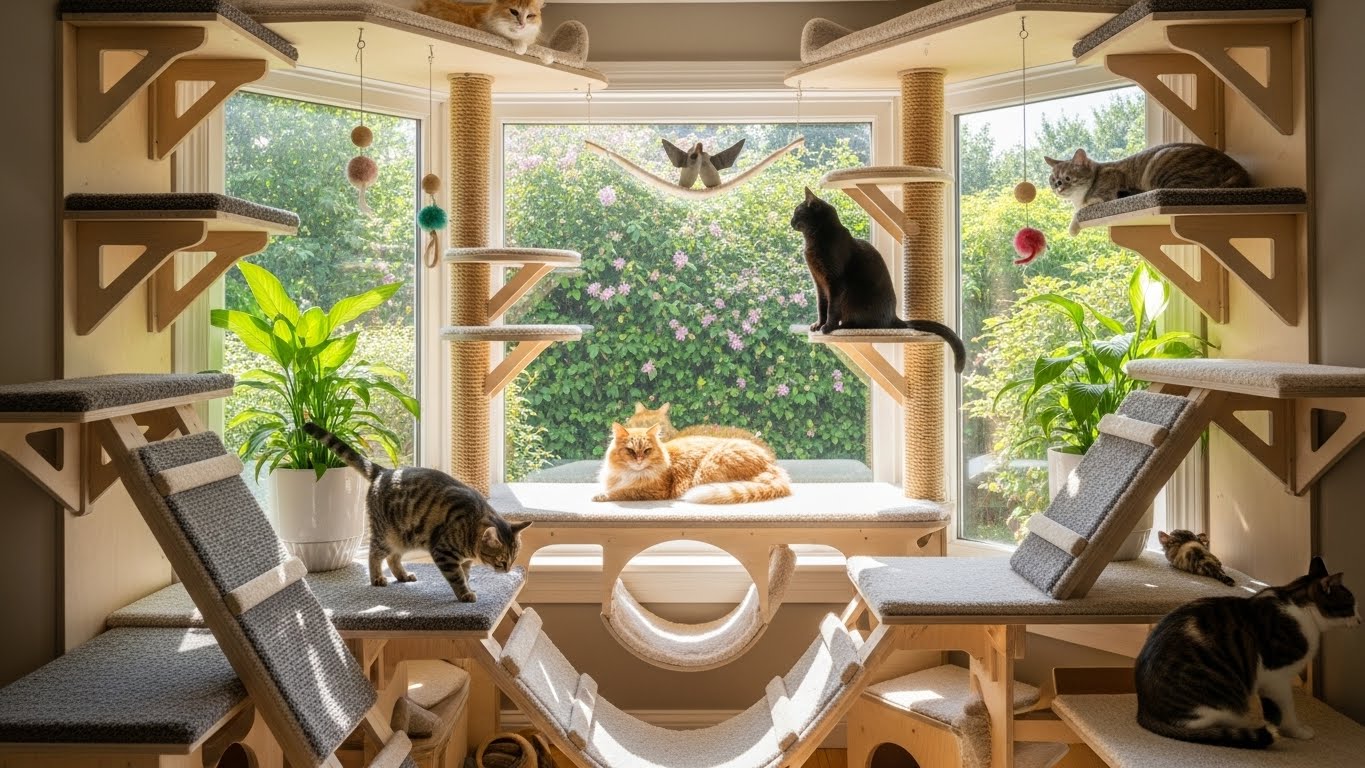
2. Window-Centered Cat Playground
Cats are natural observers, and placing play elements around windows creates endless entertainment. Window perches, shelves, and tunnels allow cats to watch birds, cars, and people while soaking up sunlight.
This setup provides mental stimulation and supports healthy sleep cycles, making it ideal for apartment-dwelling indoor cats.
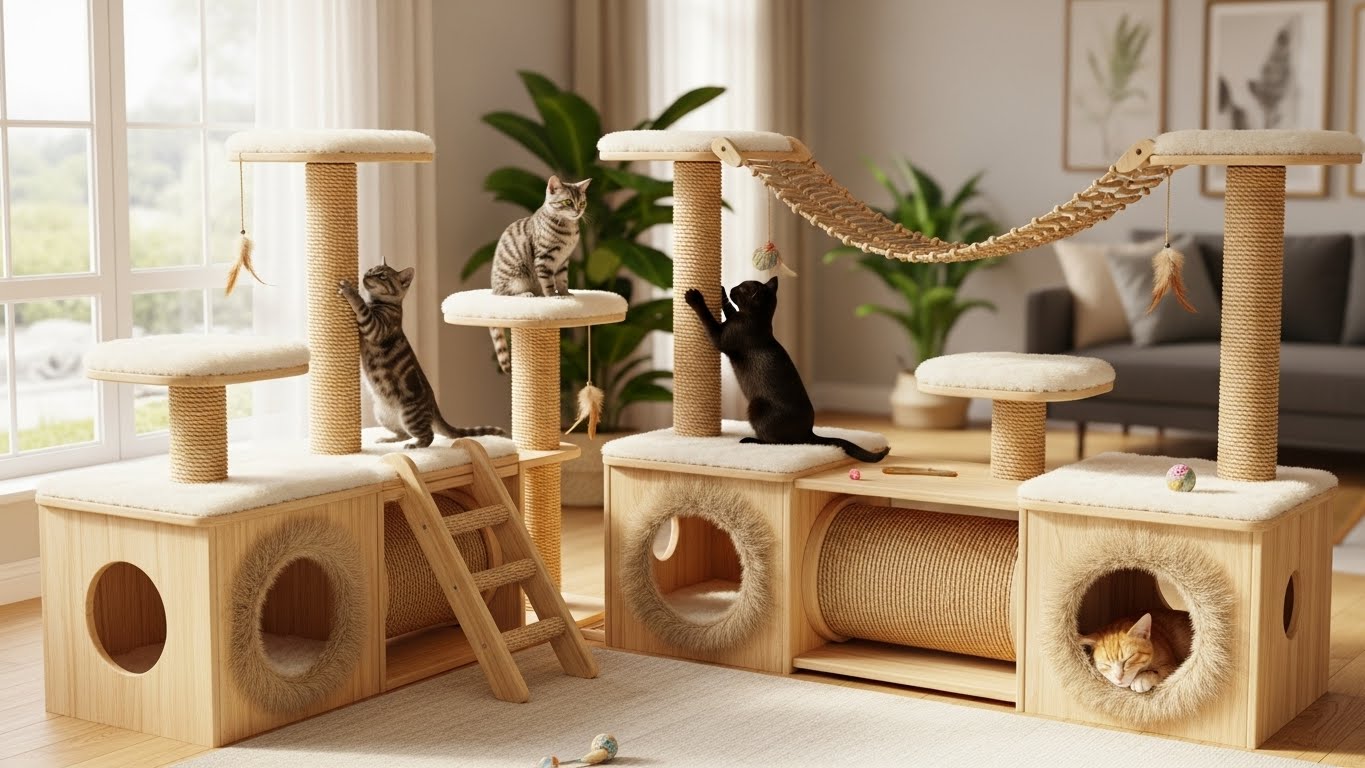
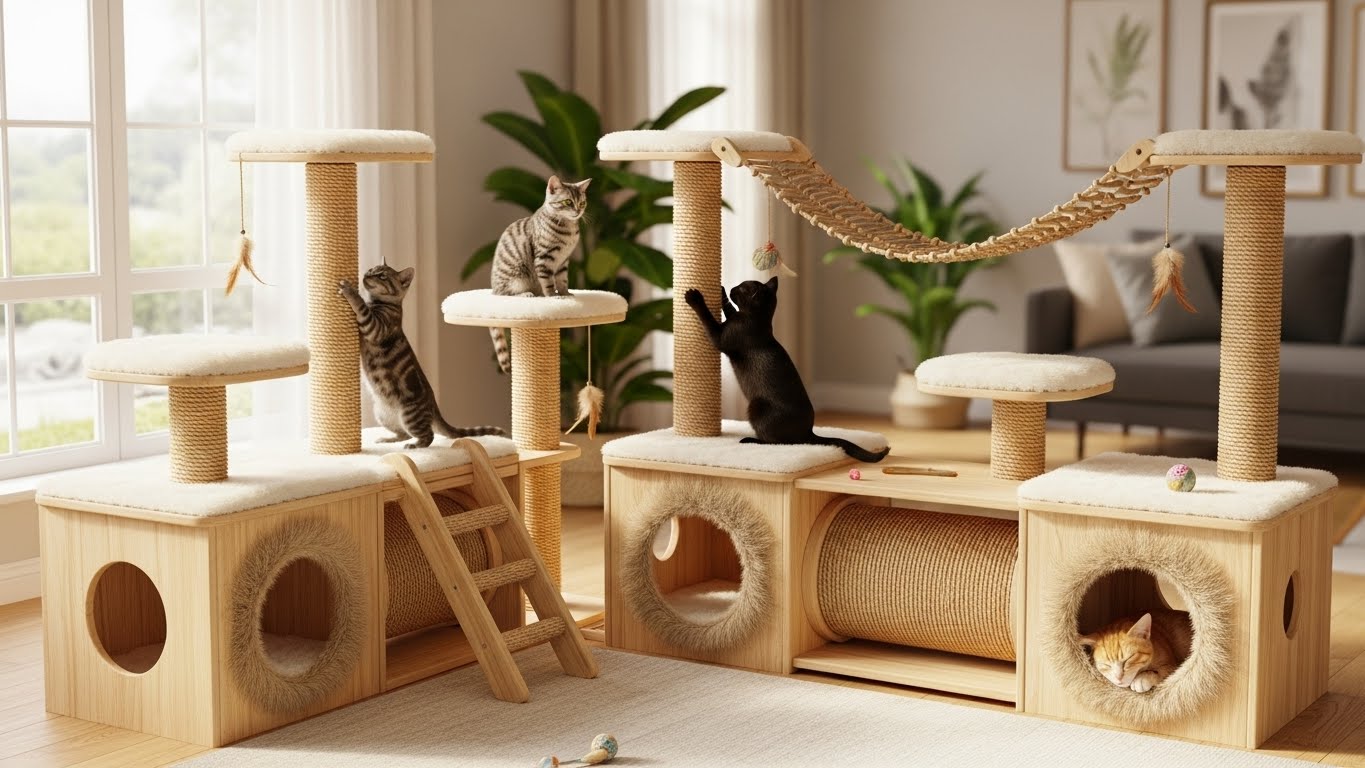
3. Modular Cat Playground with Rearrangeable Pieces
Modular cat playgrounds consist of movable tunnels, cubes, and climbing units that can be rearranged to keep the environment fresh. Cats thrive on novelty, and changing the layout occasionally prevents boredom.
This idea works well in small homes where flexibility and space efficiency are important.
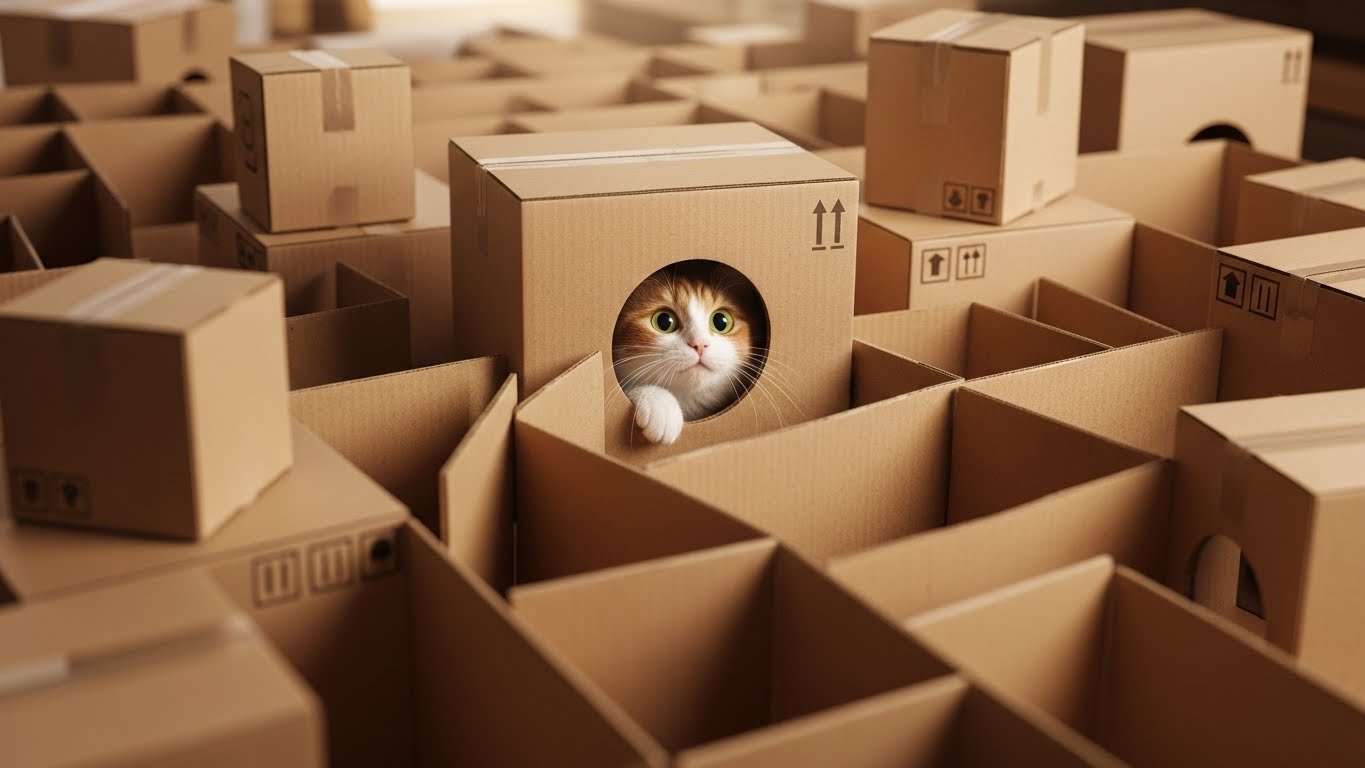
4. DIY Cardboard Box Playground Maze
Cardboard boxes are irresistible to cats. Turning them into a maze-style playground with cut-out entrances and tunnels creates an engaging and budget-friendly activity zone.
This type of playground satisfies hiding, stalking, and ambushing instincts, offering both mental and physical enrichment.
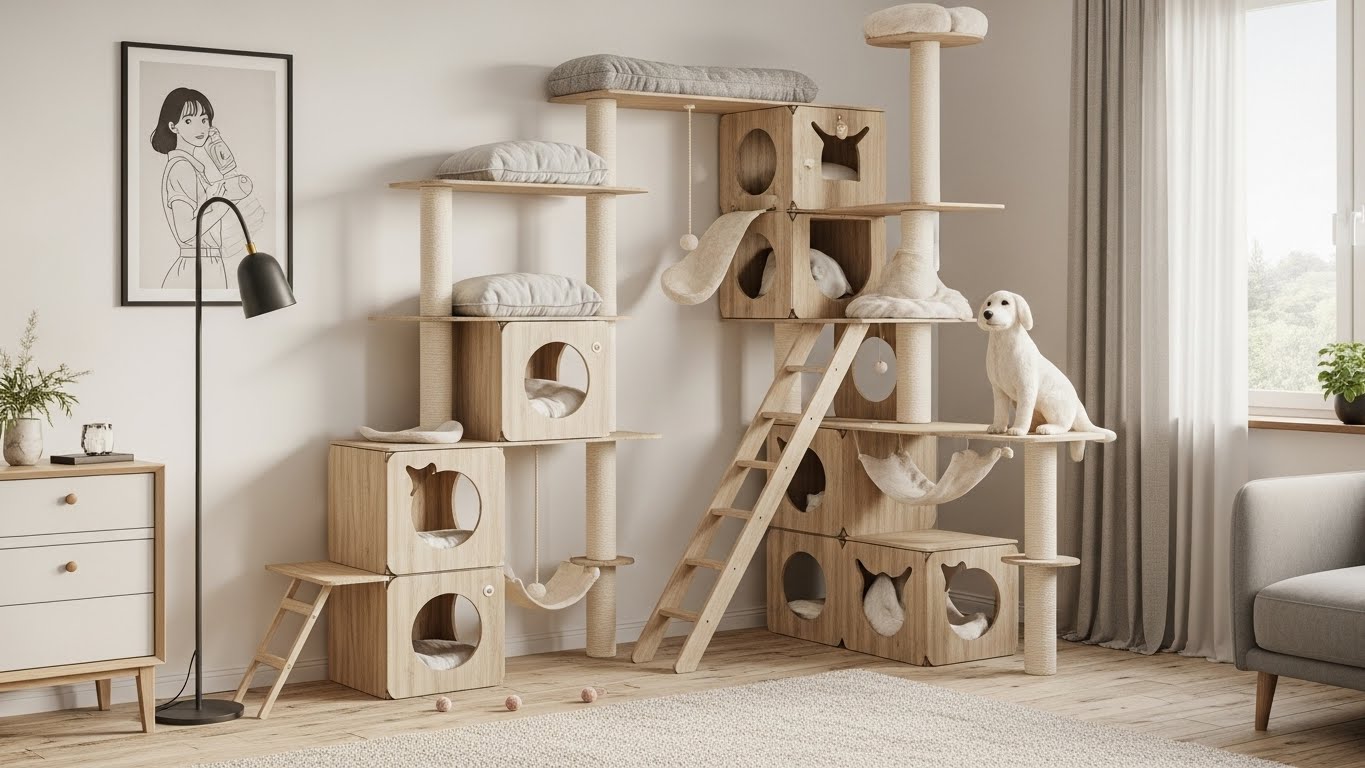
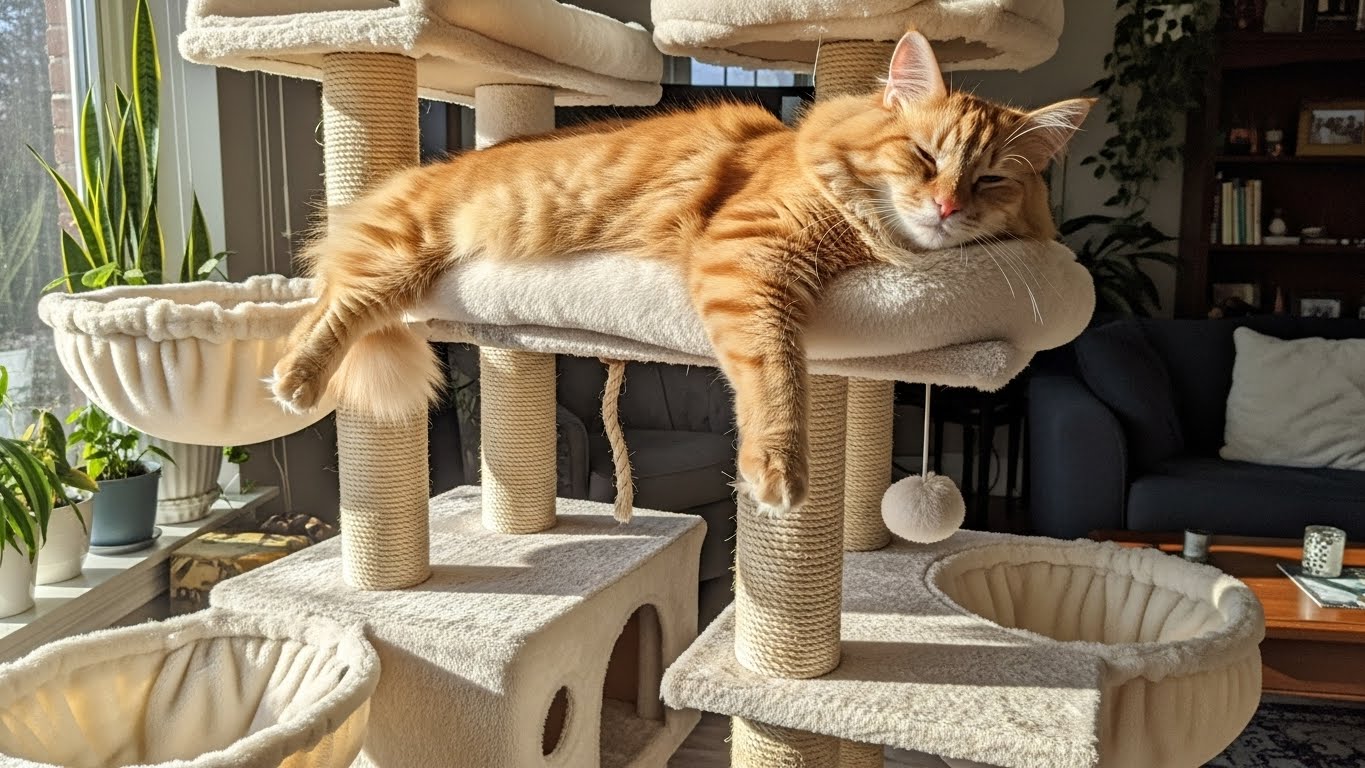
5. Multi-Level Cat Tree Playground
A large multi-level cat tree can function as a complete indoor playground. When designed with multiple platforms, hideaways, and scratching posts, it allows cats to climb, rest, and play in one compact structure.
Placing the tree near a window or in a central room maximizes engagement throughout the day.
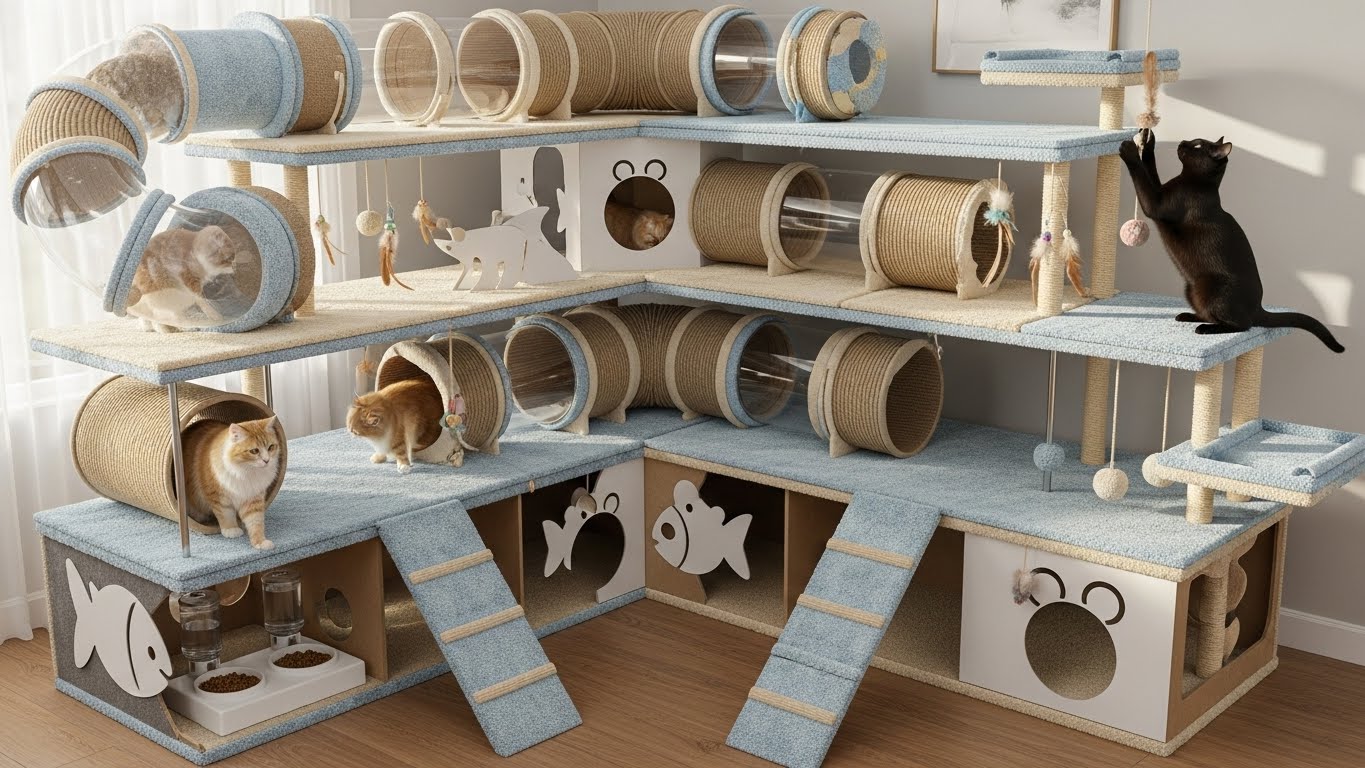
6. Tunnel-Based Indoor Cat Playground
Cat tunnels add excitement and unpredictability to playtime. Combining tunnels with cubes or tents creates a dynamic playground that encourages chasing, hiding, and surprise pounces.
Tunnels are especially effective for kittens or multi-cat households, promoting interactive play and exercise.
7. Wall-Mounted Cat Shelves with Rest Zones
Wall-mounted shelves arranged at different heights create a minimalist yet highly engaging playground. Adding small resting pads or enclosed boxes along the path gives cats opportunities to pause and observe.
This idea is perfect for modern interiors where floor space is limited but vertical space is abundant.
8. Indoor Cat Playground with Integrated Scratching Areas
Scratching is a vital part of feline behavior, and integrating scratching surfaces into a playground encourages healthy habits. Sisal panels, scratch pads, or wrapped posts placed strategically along climbing routes provide physical release and stress reduction.
This setup also helps protect furniture by redirecting scratching behavior.
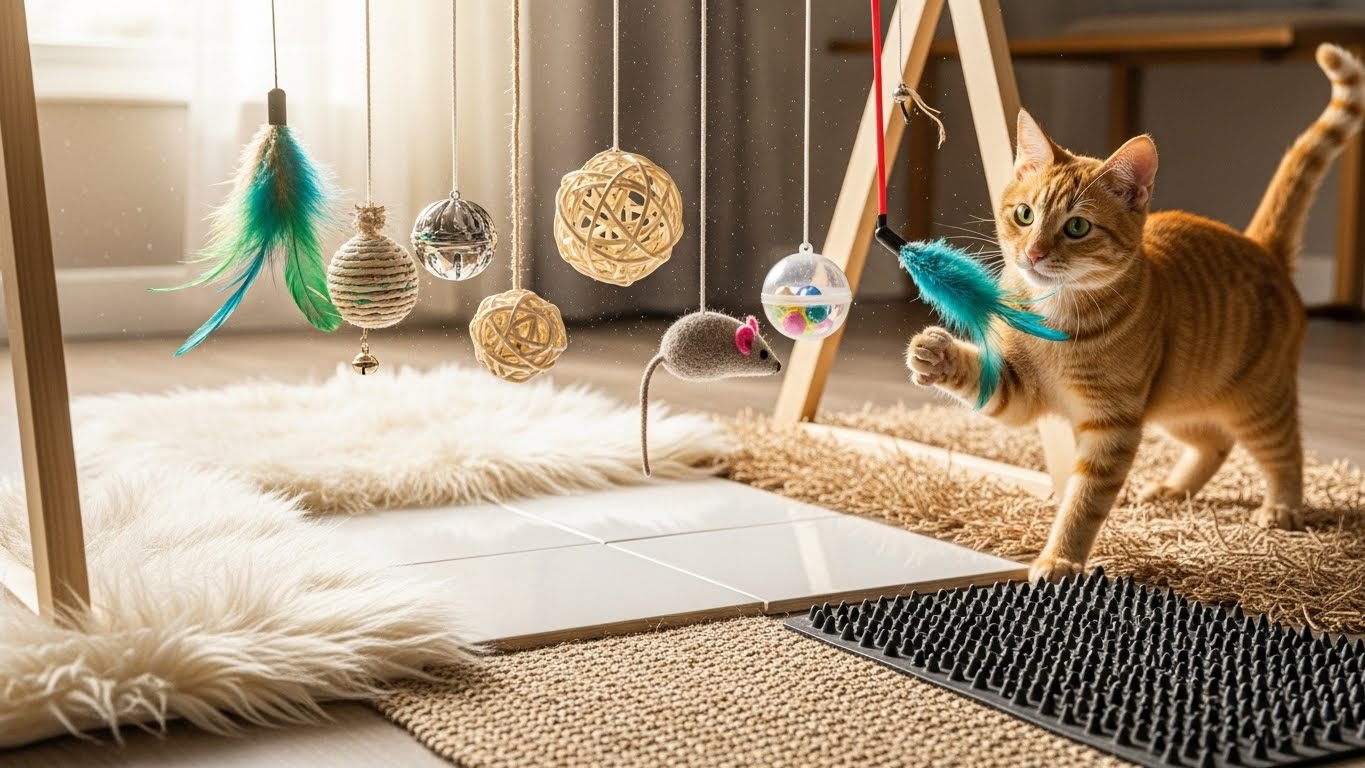
9. Sensory Playground with Textures and Sounds
Cats experience the world through their senses. A sensory-focused playground includes different textures, hanging toys, soft mats, and gentle sound elements like crinkle fabrics or bells.
This approach is especially beneficial for indoor cats that need extra stimulation to stay mentally sharp.
10. Cozy Playground Combo with Hideouts and Observation Spots
The best indoor cat playgrounds balance high-energy play with relaxation. Combining tunnels, platforms, and enclosed hideouts allows cats to switch seamlessly between activity and rest.
This all-in-one setup supports emotional well-being by giving cats control over how they interact with their environment.
ow to Design the Perfect Indoor Cat Playground
The most effective playgrounds reflect your cat’s personality and energy level. Confident climbers benefit from vertical challenges, while shy cats prefer enclosed paths and hiding spaces. Rotating toys and occasionally rearranging elements keeps the playground exciting over time.
Placement matters too—areas near windows or social spaces tend to be the most engaging.
Frequently Asked Questions (FAQ)
Do indoor cats really need a playground?
Yes. Indoor cats rely entirely on environmental enrichment to stay physically active and mentally healthy.
How much space do I need for an indoor cat playground?
Even small apartments can accommodate playgrounds by using vertical walls, windows, and corners creatively.
How often should I change the playground layout?
Changing or rotating elements every few weeks helps maintain novelty and engagement.
Final Thoughts
An indoor cat playground transforms your home into a world of exploration, exercise, and joy for your cat. With the right combination of climbing, hiding, scratching, and observing opportunities, you can create an environment that keeps your feline happy, healthy, and endlessly entertained.